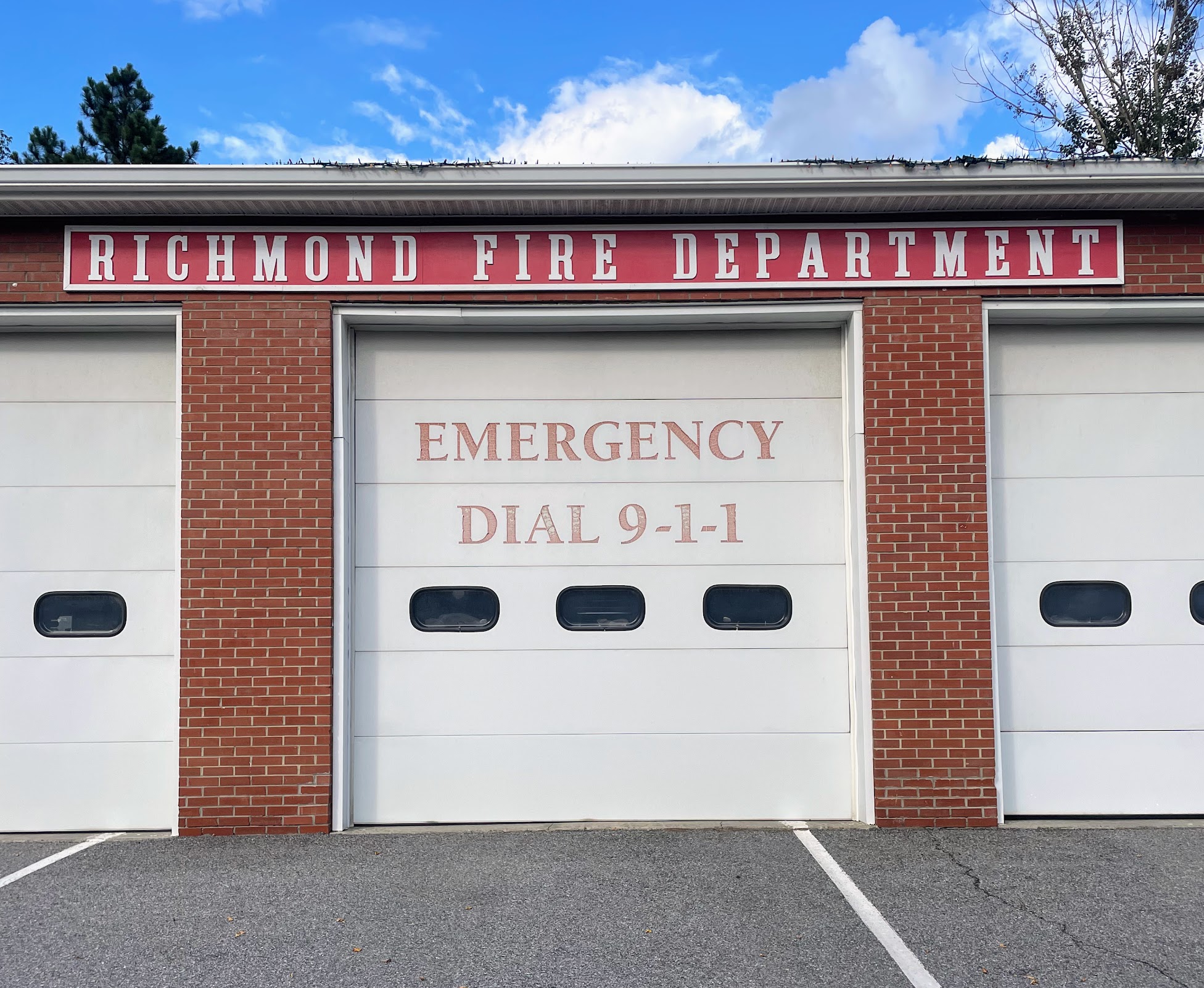
Richmond in Chittenden County. Every fire station in the county is marked —
1 here, 26 in neighbouring towns, which is
who turns out on a mutual aid call. Boundaries and water from VCGI; fire district
lines are not town lines, and village districts and contracted coverage cross
them. A town line runs out into the lake, so the shoreline here is the water
drawn over the boundary, not the boundary itself.
In an emergency dial 911. These are business lines.
History
Dennis Gile retired in 2025 after nine years as chief and fifty-seven years with the department. Jerry Levesque was appointed to succeed him and has put the department's attention on recruiting and keeping firefighters. A study of the department was carried out in early 2025; the chief and the selectboard are working from it.
The department is wholly owned by the Town of Richmond — the town owns the building and the equipment, and the members are volunteers paid an hourly rate for calls and training.
Source: Town of Richmond, 231st Annual Report, fiscal year 2024–2025.
Calls
Not obtained. Vermont law is narrower than it first looks: 20 V.S.A. § 2833 obliges a chief to report a fire to the State Fire Marshal within five days only where it caused serious injury or more than $200 of damage. The wider set — every incident type, EMS calls included — is collected through VFIRS, and participation there falls short of every department (77.53% of them in 2016).
What the state publishes from it is statewide only: 26,778 EMS calls across Vermont in 2024, against 28,057 in 2023, with no breakdown by department. The VFIRS system holding the per-department figures is open to fire departments, not to the public.
Richmond's own numbers would come from a public records request to the Division of Fire Safety, or from asking the department.
Money
Richmond voters approved $446,154 for the fire department in fiscal year 2026 — 3.37% less than the $461,718 budgeted the year before, out of a total town budget of $4,870,565.
Two fifths of it never reaches an incident. $180,000 goes to the capital reserve and $58,572 pays down the 2018 engine, principal and interest, which is what a town of four thousand people does instead of buying a fire truck outright. Salaries — the hourly rate members are paid for calls and training — come to $70,000, up 22.81% on the year. The single new line is $25,000 for a needs assessment of the department, the study the chief and selectboard have been working from.
A separate $38,033 sits under town administration as "fire protection". That is the fee the town pays its own water and wastewater department for fire flow, not money the fire department spends.
Source: Town of Richmond, FY26 Budgeted Expenses, presented to the selectboard January 2025.
Largest lines, fiscal year 2026
Fire capital reserve
$180,000
Salaries
$70,000
2018 engine, principal
$48,572
Fire department needs assessment
$25,000
Fleet maintenance
$15,000
Equipment purchase
$15,000
General/PACIF insurance
$13,425
2005 engine bond
$10,000
Radio repair and replacement
$10,000
Maintenance, general
$10,000
The 10 largest lines, against a department total of
$446,154.
Burning
Vermont requires a Permit to Kindle Fire from the town's Forest Fire Warden for anything larger than a campfire. Two exceptions: when snow covers the ground at the burn site, and when the fire is at least 200 feet from anything that will carry flame. Wardens can suspend burning outright when fire danger is high.
In Richmond, permits go through Shelburne Dispatch: 802-985-8051.
The warden system dates to 1904, when Vermont made each town responsible for preventing and fighting its own forest fires under a warden appointed by the Commissioner of Forests, Parks and Recreation with the selectboard's approval. Wardens serve five-year terms.
Sources: richmondvt.gov; Vermont Department of Forests, Parks and Recreation.
Joining
Open to Richmond residents. Meet a current firefighter first, then submit an application and start attending meetings and training while a background check and physical go through. A six-month probationary period ends with a vote of the current members.
Business meeting is the first Monday of the month, 7–9.30pm. Training is the third and fourth Mondays, same hours. Members respond to calls as they are available.
Pay starts at $15.01 an hour for training attended and calls answered, with first-responder discounts and benefits.
Source: the department's own joining page, richmondvt.gov, read September 2026.